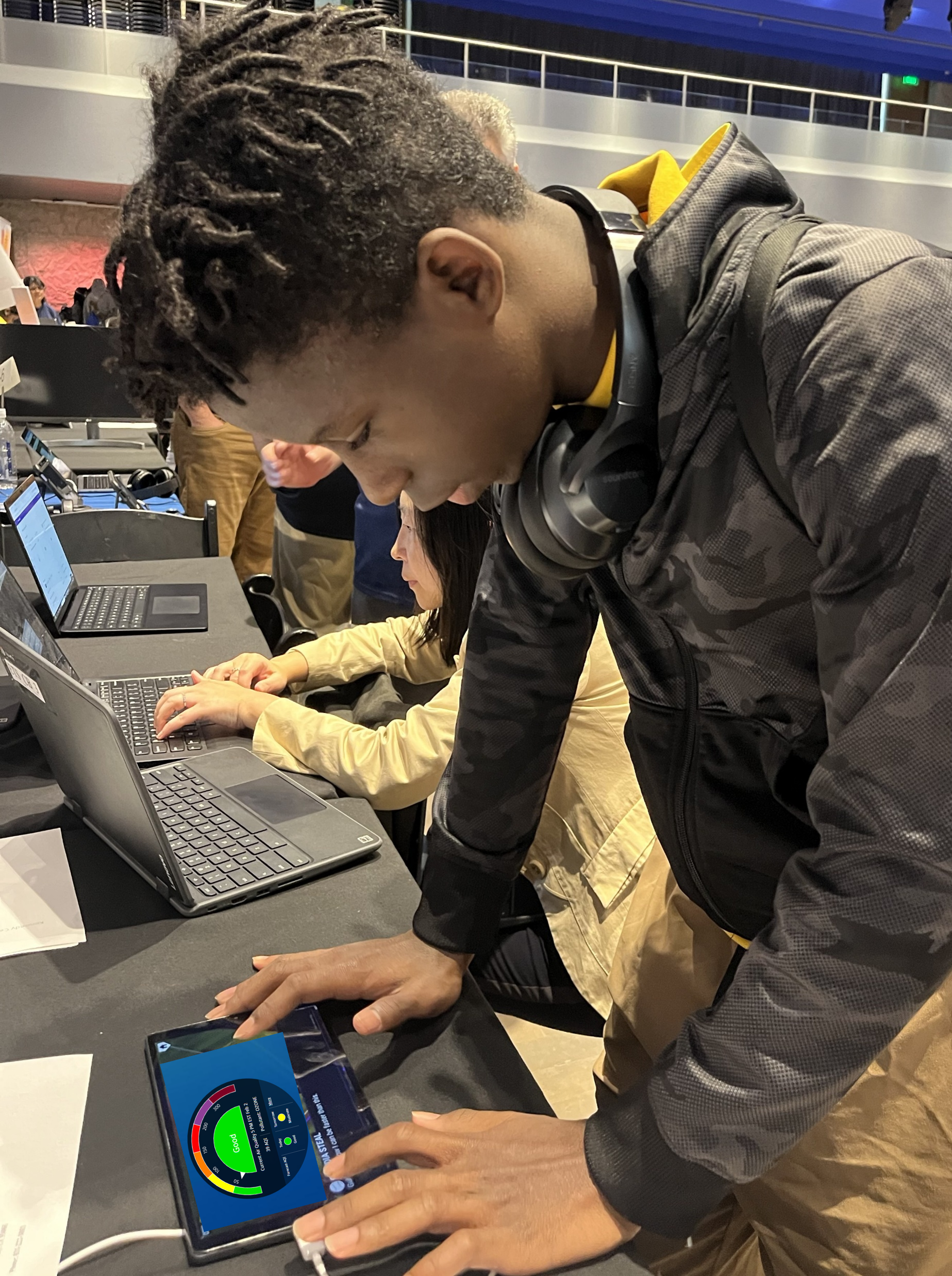
Environmental health literacy goes beyond the awareness of environmental problems. It makes the issues relevant to help see how these issues may affect the health of people and animals in our communities. Environmental health literacy is giving people the tools to understand how environmental exposures affect health and how to identify and assess environmental risks in their world. But it doesn’t stop there! The deep connection to applying science practices is evaluating ways to reduce the harm from exposure to these pollutants and to communicate solutions that can improve health.

Integrated Approaches
In a middle school classroom, these lessons are easily aligned with NGSS standards, Math standards and Health education standards and students get really excited about project-based learning that connects to real people and places and issues they care about.

Therefore, environmental health literacy isn’t just learning ABOUT the environment—it’s understanding how YOUR environment affects YOUR health.
It’s the difference between:
Knowing climate change exists and
✅ Understanding how air pollution triggers asthma in your community
Learning about water cycles and
✅ Testing for lead in your school’s drinking water
As a result, we have created some lesson materials to support bringing these ideas to your students with STEMPlay Lab’s Air Quality Investigation lessons that give students hands-on relevant STEM experience.

Science – hypothesis testing, collecting evidence
Technology – using sensors and data tools
Engineering – designing solutions to reduce exposure
Math – analyzing data, calculating risk, graphing results
Scaffolding to support learning
Environmental health literacy isn’t about adding more—it’s about going deeper with what you’re already teaching to bring real-world relevance to the classroom.

To support you in applying this into your existing STEM curriculum, here are some ideas how to scaffold Environmental Health Literacy . Start where you are and then build gradually. Every step matters. Your students will meet you where you start—and they’ll push you further than you expect.
LEVEL 1: START WITH AWARENESS
• Include human health connections related to ecosystems
• Discuss household chemical exposure in chemistry lessons
• Use environmental health datasets for data analysis problems
Impact: Students see relevance.
LEVEL 2: ADD INVESTIGATION
• Let students choose local or personally relevant environmental health topics to research
• Incorporate student-led observations and questions
• Connect classroom learning to home/community environments
Impact: Students become curious.
LEVEL 3: BUILD ASSESSMENT SKILLS
• Teach students to collect and analyze environmental data
• Guide students through risk assessment processes
• Have students evaluate multiple solutions to real problems
Impact: Students build critical thinking.
LEVEL 4: EMPOWER ACTION
• Communicate findings to authentic audiences
• Design and propose solutions to reduce exposure to risk
• Advocate for realistic changes in school/community
Impact: Students transform ideas into aciton.

Your students aren’t just learning science. They’re becoming problem-solvers who can protect their own health and advocate for their communities. This isn’t abstract. This is personal. This is powerful.
About the Author: BA Laris, MPH is the Director of STEMPlay Labs and is passionate about broadening participation in STEM fields through game-based learning that makes content accessible, engaging, and relevant—proving that being “silly and fun” makes teaching and learning stick.